Croatia
Adriatic Coast
Why Croatia stuck with us
Exploring the southern coast of Croatia, hopping from one port town and island to the next, was one of those trips our family will always remember. Croatia has such an interesting mix of Mediterranean beauty, old-world history, incredible food and wine, and a relaxed coastal way of life that we absolutely loved.
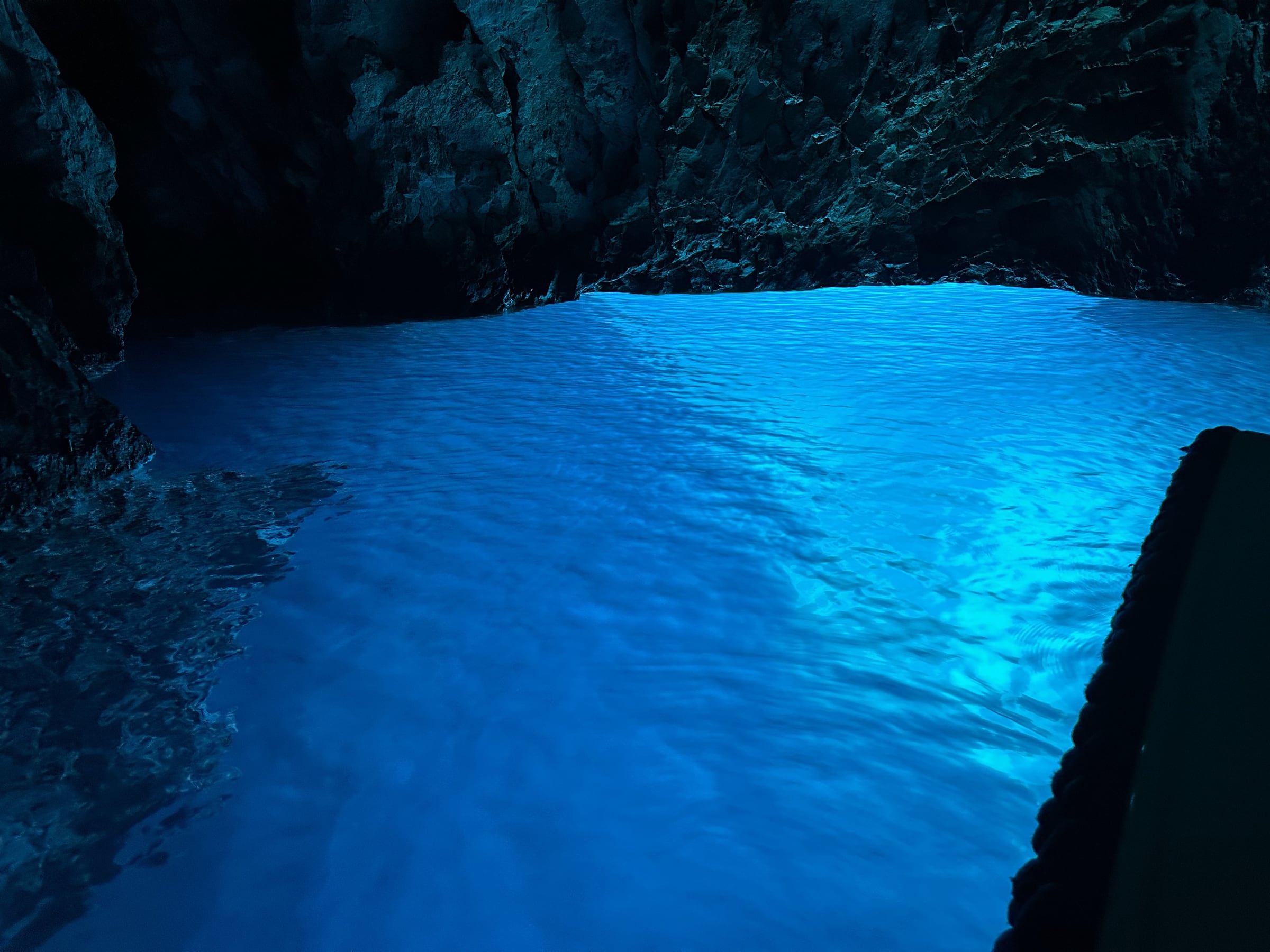
Some of our favorite memories were simply wandering through the old towns, swimming in beautiful little coves, exploring caves, eating fresh seafood, and taking in the scenery along the way.
Hvar and Dubrovnik were probably our two favorite stops, but every place we visited felt different and worth seeing. Traveling along the coast from Split to Hvar, Korčula and finally Dubrovnik made the journey itself part of the experience. Some of our best days were spent out on the water, stopping to swim and explore places we never would have reached otherwise.
One saying we heard in Croatia has always stuck with us:
A fish swims three times in its life: in the sea, in olive oil, and in wine.
Getting there and getting around
We flew into Split, the northernmost point of our trip, and slowly worked our way south toward Dubrovnik.
We chose to travel between several of our stops by boat, which ended up being one of our favorite parts of the trip. Instead of simply getting from one place to another, we were able to make stops along the way and experience more of the coastline.
While staying on Hvar, we also rented a car for a day. It was a great way to see more of the island beyond Hvar Town, including smaller towns and more remote swimming spots.
Once we reached Dubrovnik, we used a car service from the harbor to our Airbnb and a taxi to the airport. Within Split, Hvar, Korčula and Dubrovnik, we walked most of the time.
A sample rhythm, not a rigid itinerary
Days 1–2 — Split Arrive in Split and give yourself time to explore the city, especially the historic center and waterfront. This is also a good place to incorporate a day on the water or a visit to the Blue Cave before continuing on to Hvar.
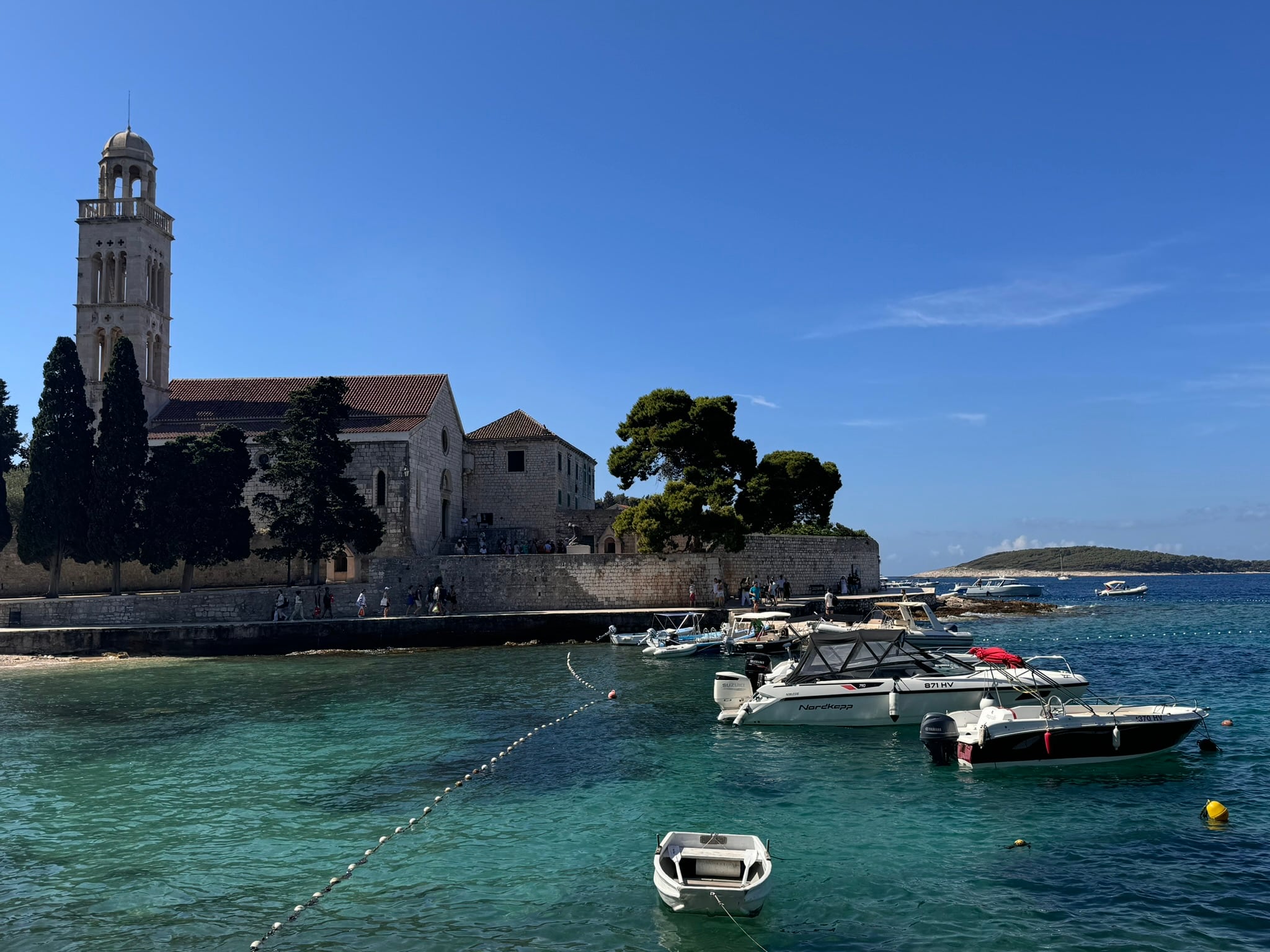
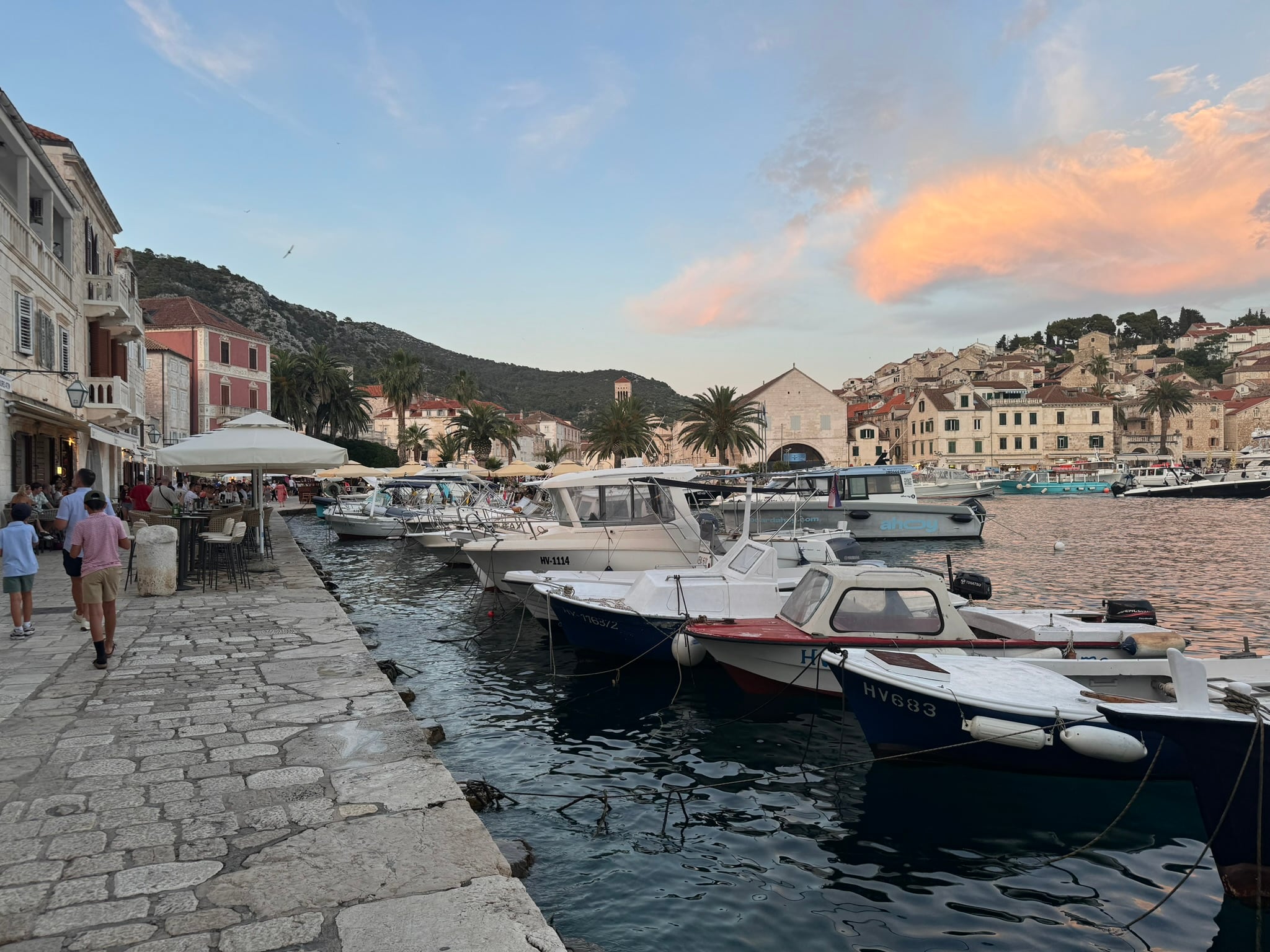
Days 3–5 — Hvar Explore Hvar Town, wander the old streets, enjoy the restaurants and waterfront, and spend a day out on the water discovering nearby coves, caves and swimming spots.
Use another day to rent a car and explore more of the island. Getting outside Hvar Town gave us a completely different perspective and let us find smaller towns and beautiful places to swim that we otherwise would have missed.
And leave yourself some unplanned time. Hvar is one of those places where sitting by the water, having a long lunch and enjoying where you are can be just as memorable as sightseeing.
Day 6 — On to Dubrovnik, via Korčula Continue south toward Dubrovnik, stopping in Korčula for lunch and a few hours of exploring its beautiful old town. Arrive in Dubrovnik, get settled and spend the evening wandering through the city.
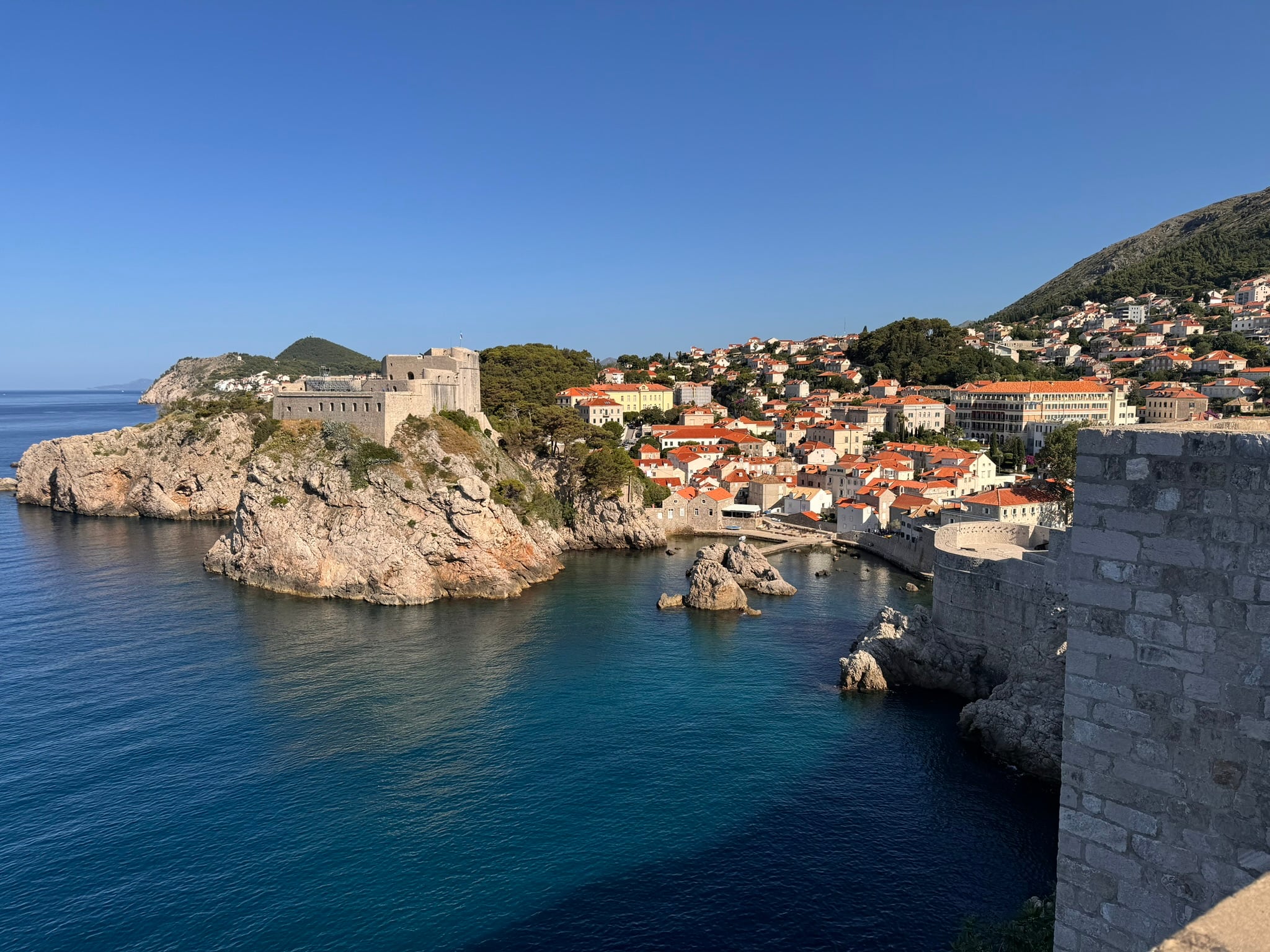
Days 7–9 — Dubrovnik Give yourself plenty of time to enjoy Dubrovnik without rushing. Walk the city walls, explore the old town, find a spot for a swim just outside the walls, and enjoy some of the restaurants tucked throughout the city.
We also loved visiting Lokrum Island, just offshore from Dubrovnik. Spend part of the day exploring the island, swimming and simply enjoying being away from the crowds of the old town.
Family notes
Croatia was an incredible family trip for us and one we would absolutely do again.
The combination of time on the water, caves, unbelievably clear sea, historic towns, beautiful scenery, food and culture kept all four of us interested. It had enough adventure for the kids while still feeling relaxing for us.
A few practical things: much of the swimming along this part of the coast is from rocks or pebble beaches rather than wide sandy beaches, so water shoes are definitely worth packing. The historic towns also mean cobblestones, stairs and plenty of walking, so comfortable shoes are important.
More than anything, Croatia just felt easy to enjoy. There was always somewhere beautiful to swim, something interesting to explore and a great meal waiting at the end of the day. The scenery is incredible, but the people and the way of life are a big part of what made this trip so memorable for our family.